Handmade Pottery and Ceramic Arts in Canada

A reference archive covering wheel throwing, hand-building methods, kiln firing schedules, clay body selection, and the practical steps of establishing a home studio practice.

Updated May 2026 — Toronto, ON

Wheel Throwing Takes More Than Just a Wheel

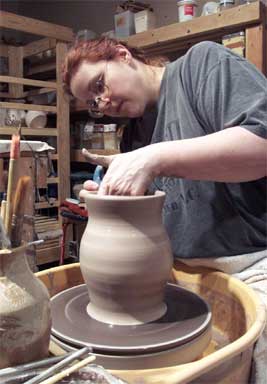
The mechanics of centering clay are straightforward to describe and genuinely difficult to develop. Most beginners spend their first several sessions working through the same friction and torque problems that every potter has encountered. What changes with practice is not the clay — it is the body position, the breath, and the relationship between hand pressure and wheel speed.

Read the Full Guide

Clay Body Fundamentals

The clay you start with determines the firing temperature you work toward, the glaze chemistry you need, and the structural qualities of the finished piece.

Earthenware ceramic bowl

Earthenware

Fires between cone 06 and cone 02 (approximately 999–1046°C). Porous body, warm terracotta tones, widely available from Canadian ceramic suppliers. Suitable for decorative work and low-stress functional pieces.

Stoneware ceramics pieces

Stoneware

Fires between cone 6 and cone 10 (1222–1285°C). Dense, vitrified, and suited to functional dinnerware. The most common choice for home studio potters in Canada due to its durability and wide glaze compatibility.

Porcelain vase on a shelf

Porcelain

Fires between cone 6 and cone 10. Translucent when thin, exceptionally smooth, and demanding to centre on the wheel. Rewards precision work and is commonly used for fine functional ware and sculptural forms.

Setting Up a Home Ceramic Studio in Canada

A functional home studio does not require a large footprint. A wheel, a small electric kiln, a wedging table, and adequate ventilation cover the essentials. The more consequential decisions involve electrical capacity (most kilns require a dedicated 240V circuit) and floor protection, both of which have straightforward solutions documented in detail in the clay body selection guide.

Studio Setup Notes

Hand-Building Methods

Coil building, slab construction, and pinch work each produce distinct surface qualities and are well-suited to forms that resist throwing on the wheel — flat trays, sculptural vessels, and architectural tiles among them. Hand-building requires no powered equipment and is accessible in any space with a work surface and access to a kiln.

Glaze Chemistry Basics

Glazes are essentially glass-forming mixtures applied to bisqueware before a second firing. The primary variables are silica (glass former), alumina (stabiliser), and flux (melting agent). In a home studio context, using tested commercial glaze recipes from sources like Digital Fire reduces the risk of glaze defects during early work.

Kiln Selection for Home Studios

Electric kilns remain the standard choice for Canadian home studios because they require no gas line, produce consistent results, and are available in sizes from 0.03 m³ to 0.4 m³. Front-loading models simplify loading large pieces. Top-loading kilns are more compact and typically lower in cost at smaller chamber volumes.

Ceramic Arts Communities in Canada

Organisations such as Ceramics Canada and the Canadian Crafts Federation maintain directories of studios, firing groups, and clay suppliers by province. Shared kiln access through community studios is a common arrangement for potters who are not yet ready to invest in their own firing equipment.

Kiln Firing Is Where Most Work Either Succeeds or Fails

Temperature ramp rates during the early stages of bisque firing matter more than most beginners expect. Rapid heating drives moisture out too quickly, producing bloating and cracks in pieces that appeared fully dry on the shelf. A reliable firing schedule specifies hold times at critical temperature thresholds — particularly around 120°C (steam inversion), 573°C (quartz inversion), and the top temperature soak period.

Firing Schedule Details

Contact Blue Willow Shop

For questions about ceramic techniques, studio setup, or the content on this site, use the form or reach out directly by phone or email.

Blue Willow Ceramics Inc.
147 Pottery Lane, Unit 3
Toronto, ON M4B 1X2, Canada

Phone: +1 (416) 555-0183

Email: info@bluewillowshop.org

Send a Message